
Atoms, Alliances and the New Middle East: How the US–Saudi Nuclear Deal Could Reshape Regional Power
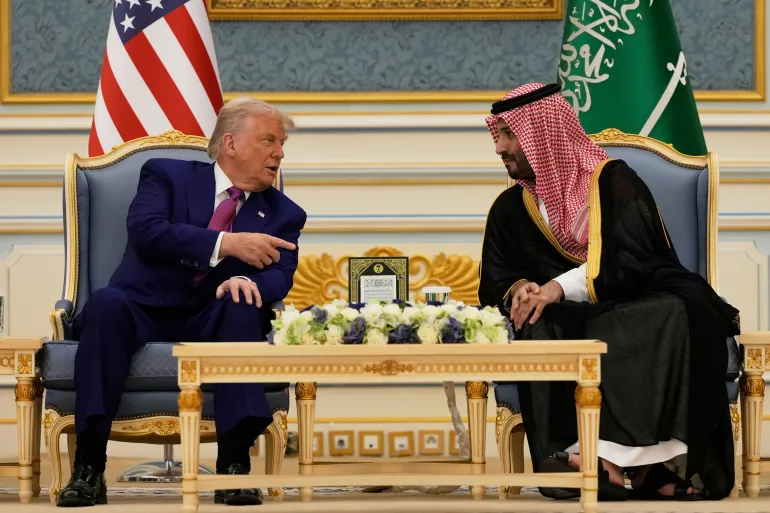
The announcement that the United States and Saudi Arabia have signed a peaceful nuclear cooperation agreement is more than another bilateral diplomatic achievement. It represents a strategic milestone with consequences that extend far beyond energy policy. At a time when the Middle East is emerging from years of geopolitical turbulence including the confrontation between Iran and the United States, the continuing Gaza crisis, renewed competition among global powers, and the growing importance of energy security the agreement reflects a broader effort to redefine regional alliances and reshape the future balance of power.
Although the agreement has been presented as a framework for civilian nuclear cooperation, its political significance is impossible to ignore. Throughout modern history, civilian nuclear technology has often served as a foundation for broader strategic partnerships, combining scientific collaboration, economic investment, technological exchange and long-term security commitments. Washington’s latest move therefore sends a clear diplomatic message: despite the rise of China and Russia in the Gulf, the United States intends to remain the principal strategic partner for Saudi Arabia.
For decades, the relationship between Washington and Riyadh has rested upon a simple formula American security guarantees in exchange for stable energy supplies. However, the twenty-first century has fundamentally altered this equation. Oil remains important, but technological leadership, renewable energy, artificial intelligence, advanced manufacturing and nuclear energy have become equally significant components of national power. The new agreement reflects this changing geopolitical reality.
Saudi Arabia has long argued that diversifying its energy mix is essential for achieving the ambitions of Vision 2030. Nuclear power offers the Kingdom an opportunity to reduce domestic oil consumption while expanding electricity production, supporting industrial development and creating high-skilled employment. Economically, the benefits could be substantial. Every barrel of oil saved from domestic power generation can instead be exported, strengthening state revenues and supporting long-term economic transformation.
From Washington’s perspective, the agreement also carries major strategic advantages. By providing advanced civilian nuclear technology under international safeguards, the United States strengthens its influence over Saudi Arabia’s future nuclear infrastructure while reducing opportunities for competitors such as China or Russia to dominate the Kingdom’s expanding nuclear sector. In an era defined by technological rivalry, influence increasingly depends not only upon military alliances but also upon ownership of critical infrastructure and strategic industries.
Yet the regional implications are considerably more complex.
Iran will almost certainly interpret the agreement through the lens of its longstanding rivalry with both Saudi Arabia and the United States. Although Riyadh and Tehran restored diplomatic relations with Chinese mediation in 2023 and have since pursued cautious dialogue, deep strategic mistrust remains. The recent cycle of military confrontation between Iran, Israel and the United States has demonstrated how quickly regional tensions can escalate into broader security crises.
From Tehran’s perspective, even a peaceful Saudi nuclear programme may eventually alter the regional balance. Iranian policymakers have consistently argued that Western governments apply different standards to allies and adversaries. Consequently, the agreement may reinforce Iranian perceptions that regional security continues to be shaped by selective strategic partnerships rather than universal principles.
This perception matters because security competition rarely depends solely upon military capability; it also depends upon political psychology. If one regional power believes another is acquiring strategic advantages, even within peaceful legal frameworks, reciprocal responses often follow. Such dynamics have historically contributed to regional arms competition across multiple parts of the world.
Israel is likely to approach the agreement with cautious pragmatism. On one hand, closer US-Saudi cooperation strengthens an important regional partner capable of balancing Iranian influence. On the other, Israel has traditionally maintained strong concerns regarding the spread of sensitive nuclear technologies throughout the Middle East. Much will therefore depend upon the safeguards, verification mechanisms and transparency embedded within the agreement.
The broader Gulf region also faces important strategic calculations. Countries including the United Arab Emirates have already invested heavily in peaceful nuclear energy under international supervision. Saudi Arabia’s entry into this field may accelerate regional technological competition while encouraging greater investment in education, engineering and scientific research. Managed responsibly, such competition could stimulate innovation rather than instability.
The agreement must also be understood within the context of great-power competition. China has significantly expanded its economic influence throughout the Gulf through infrastructure investment, digital technology and energy partnerships. Russia, despite international sanctions, continues to pursue defence and energy cooperation with several regional governments.
Against this backdrop, the US-Saudi nuclear agreement represents more than an energy partnership. It demonstrates Washington’s determination to remain deeply engaged in Middle Eastern security architecture despite increasing attention toward the Indo-Pacific. Rather than withdrawing from the region, the United States appears to be redefining its presence through advanced technology, investment and strategic cooperation.
Economically, the implications extend beyond Saudi Arabia itself. Nuclear infrastructure projects generate decades of commercial activity involving engineering firms, construction companies, fuel suppliers, regulatory institutions and research partnerships. International investors generally interpret such agreements as signals of long-term political stability and policy continuity, factors that encourage foreign direct investment.
Global energy markets may also experience indirect benefits. If Saudi Arabia gradually shifts part of its domestic electricity production toward nuclear energy, greater volumes of crude oil could become available for international export. While this alone will not determine global oil prices, it could strengthen Saudi Arabia’s flexibility within international energy markets.
For developing countries, including Bangladesh, the agreement offers valuable lessons. Energy security increasingly depends upon diversified partnerships rather than dependence upon a single technology or geopolitical bloc. Nations seeking sustainable development must balance economic growth, environmental responsibility and strategic autonomy while avoiding unnecessary entanglement in great-power competition.
Nevertheless, optimism should be tempered with realism
The Middle East remains one of the world’s most fragile strategic environments. Conflicts involving Gaza, Lebanon, Syria, Yemen and the broader Iran-Israel rivalry continue to generate instability. In such an environment, even peaceful technological cooperation can become politically sensitive if regional confidence-building measures remain insufficient.
Diplomacy therefore becomes indispensable. Transparency, robust international inspections, adherence to non-proliferation obligations and continuous regional dialogue will determine whether this agreement contributes to stability or inadvertently fuels new suspicions. The success of peaceful nuclear cooperation ultimately depends not merely upon reactors or technology but upon political trust.
History demonstrates that nuclear energy can become either an engine of development or a catalyst for insecurity. Countries such as Japan, South Korea and France illustrate how peaceful nuclear programmes can support industrial transformation under strong institutional governance. Conversely, regions characterised by persistent mistrust often struggle to separate civilian technology from strategic competition.
The United States and Saudi Arabia now face the responsibility of proving that their partnership belongs to the first category rather than the second.
The agreement should therefore be viewed neither as a diplomatic triumph alone nor as an inevitable source of regional instability. Instead, it represents a strategic test of twenty-first century diplomacy whether technological cooperation can coexist with regional security, whether economic modernisation can reinforce peace, and whether geopolitical competition can be managed without escalating confrontation.
Ultimately, the future of the Middle East will not be determined solely by oil reserves, military alliances or nuclear technology. It will depend upon whether regional leaders choose cooperation over confrontation, strategic confidence over perpetual suspicion, and diplomacy over escalation. The US–Saudi peaceful nuclear cooperation agreement may well become one of the defining diplomatic initiatives of this decade not because of the reactors it builds, but because of the regional order it has the potential to shape.
(Writer Shahidul Alam Swapan is a Swiss-based private banking financial crime specialist, columnist, and poet writing on governance, democracy, financial integrity, and international affairs. He could be reached at: shahidul.alam@bluewin.ch)