
World Cup Semi-final Revives One of Football's Greatest Feuds
England vs Argentina: Football's Fiercest Feud Returns to the World Cup Stage
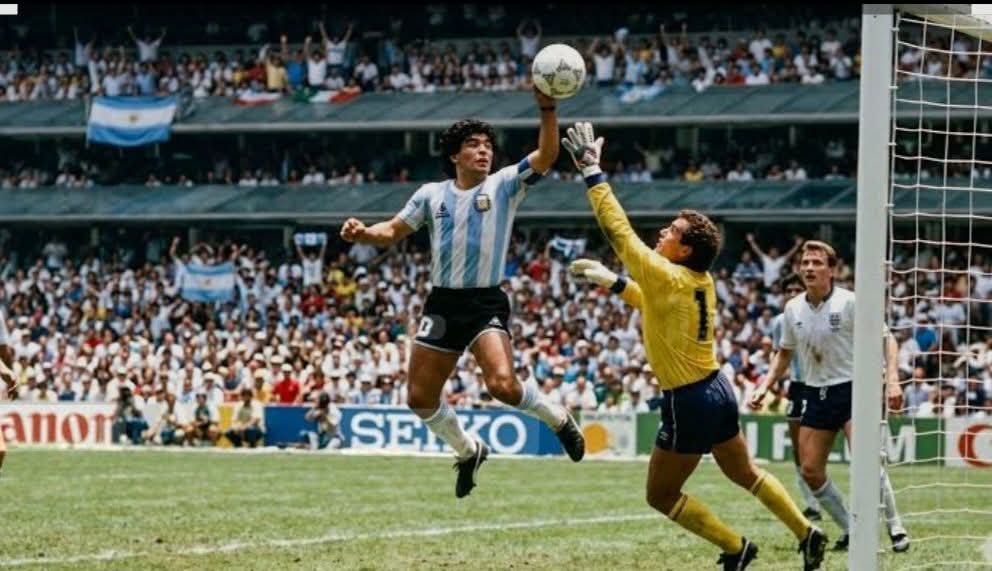
The World Cup has witnessed countless great rivalries, but few carry the emotion, history and political baggage of England versus Argentina. Every meeting between these two footballing giants has produced unforgettable moments—brilliant goals, controversial decisions, red cards and enduring drama. It is a rivalry shaped not only by football but also by history, national pride and political tensions.
After more than two decades, the two old adversaries are set to renew their rivalry when they meet in the 2026 FIFA World Cup semi-final next Wednesday. The showdown promises to add another dramatic chapter to one of football's most compelling stories.
A rare encounter
Despite being two of football's traditional powerhouses, England and Argentina have rarely faced each other outside the World Cup. Political tensions following the Falklands War and the fierce emotions surrounding previous encounters have limited meetings between the two nations, making every clash a major global event.
Since Lionel Messi made his senior debut for Argentina in 2005, the teams have met only once. Ironically, Messi did not feature in that match.
Fresh from leading Argentina to the FIFA World Youth Championship title, the teenage Messi earned his first senior call-up. However, his international debut against Hungary lasted just 30 seconds before he was sent off by referee Markus Merk after appearing to swing an arm at defender Vilmos Vanczák while trying to break free from a challenge.
That red card ruled him out of Argentina's friendly against England in Geneva less than three months later.
In Messi's absence, Argentina twice took the lead before Michael Owen struck twice late in the match to complete a dramatic 3-2 comeback victory for Sven-Göran Eriksson's England.
A rivalry forged on the World Cup stage
England and Argentina first met in the World Cup in Chile in 1962. Since then, nearly every World Cup encounter has delivered controversy, spectacular goals and unforgettable drama.
Their relationship, however, extends far beyond football. The 1982 Falklands War left deep scars on both nations, and its legacy has inevitably spilled onto the football field. For many supporters, particularly in Argentina, matches against England carry enormous symbolic significance.
Many observers have long viewed these contests as more than sporting events. They represent national pride, historical memory and, for some, symbolic redemption.
The rivalry took on an even deeper significance in 1982 when Argentina and the United Kingdom fought the Falklands War over the South Atlantic islands.
The 74-day conflict claimed the lives of 649 Argentines and 255 British servicemen, leaving emotional scars on both nations.
Only four years later, the two countries met again—this time in the quarter-finals of the 1986 World Cup in Mexico. The football pitch became far more than a sporting arena; for many, it symbolised an unspoken continuation of the conflict.
Maradona's ‘Four Minutes’ that changed football forever
No discussion of this rivalry is complete without revisiting the 1986 World Cup quarter-final in Mexico City.
Diego Maradona produced two of the most famous goals in football history within four extraordinary minutes.
In the 51st minute, Maradona punched the ball past goalkeeper Peter Shilton with his left hand. The officials failed to spot the infringement, and the goal stood. It later became immortalised as the "Hand of God."
Just four minutes later came pure genius.

Collecting the ball inside his own half, Maradona dribbled past almost the entire England defence before scoring what FIFA would later recognise as the "Goal of the Century."
Argentina won 2-1 in one of the most famous matches ever played, a victory many Argentines viewed as symbolic redemption after the Falklands War.
Beckham's fall—and redemption
The rivalry continued into a new generation at the 1998 World Cup in France.
After teenage sensation Michael Owen scored one of the tournament's greatest goals, the match produced another unforgettable controversy. Early in the second half, David Beckham reacted to a foul by Diego Simeone with a retaliatory kick and was shown a straight red card.
Despite battling bravely with ten men to earn a 2-2 draw, England lost the penalty shootout 4-3.
Beckham became England's most criticised footballer overnight. His effigies were burned, and he endured relentless public abuse following the nation's elimination.

Football, however, always offers opportunities for redemption.
At the 2002 FIFA World Cup in Japan and South Korea, Beckham finally found his moment. His penalty secured a 1-0 victory over Argentina in the group stage, and his passionate celebration became a symbol of personal redemption after the heartbreak of 1998.
Where the rivalry truly began
Although the Falklands War intensified the hostility between the two nations, tensions on the football field date back even further.
During the 1966 World Cup quarter-final in England, Argentina captain Antonio Rattín was controversially sent off. Refusing to leave the field immediately, Rattín protested the decision, creating one of the tournament's biggest controversies.
The aftermath proved equally damaging. England manager Alf Ramsey instructed his players not to exchange shirts with the Argentine team and reportedly referred to the Argentines as "animals" after the match.
The remark was widely condemned in Argentina as deeply offensive, further souring relations between the two footballing nations.
A gruelling road to the last four
Neither side has enjoyed an easy route to the semi-finals.
Defending champions Argentina have survived a series of dramatic encounters under Lionel Scaloni. The Albiceleste edged Cape Verde 3-2 after extra time in the Round of 32 before producing a stunning comeback from two goals down to defeat Egypt 3-2 in the Round of 16. Their quarter-final against Switzerland proved equally demanding, with the South Americans eventually sealing a 3-1 extra-time victory after the match ended 1-1 in regulation time. Goals from Julián Álvarez and Lautaro Martínez in extra time booked Argentina's place in the final four.
England, meanwhile, have continued their impressive rise under Thomas Tuchel. After overcoming Mexico 3-2 in the Round of 32, the Three Lions defeated surprise package Norway 2-1 in the quarter-finals thanks to another outstanding display from Jude Bellingham, whose two goals proved decisive. England have now reached the semi-finals in four of the last five major international tournaments, underlining their remarkable consistency on the biggest stage.
More than just a match
England versus Argentina has never been an ordinary football fixture. It is a contest where history, politics and sport collide.
From Rattín's controversial dismissal in 1966 to Maradona's genius in 1986, from Beckham's red card in 1998 to the long absence of regular meetings, every chapter has added to the mythology of this extraordinary rivalry.
Now, with a place in the 2026 FIFA World Cup final at stake, another chapter is about to be written. Regardless of the result, the latest meeting between England and Argentina is certain to capture the imagination of football fans around the world—because when these two nations meet, history is never far away.
A Rivalry Written in World Cup History
World Cup meetings between Argentina and England have rarely disappointed.
1966: England won 1-0 in the quarter-finals.
1986: Argentina triumphed 2-1 through Maradona's unforgettable double.
1998: Argentina progressed after winning 4-3 on penalties following a 2-2 draw.
2002: England claimed a 1-0 victory through Beckham's penalty.
With two wins apiece across those four World Cup encounters—one decided on penalties—the rivalry remains remarkably balanced.