
Dhaka Faces Growing Earthquake Risk as Experts Warn of Catastrophic Consequences
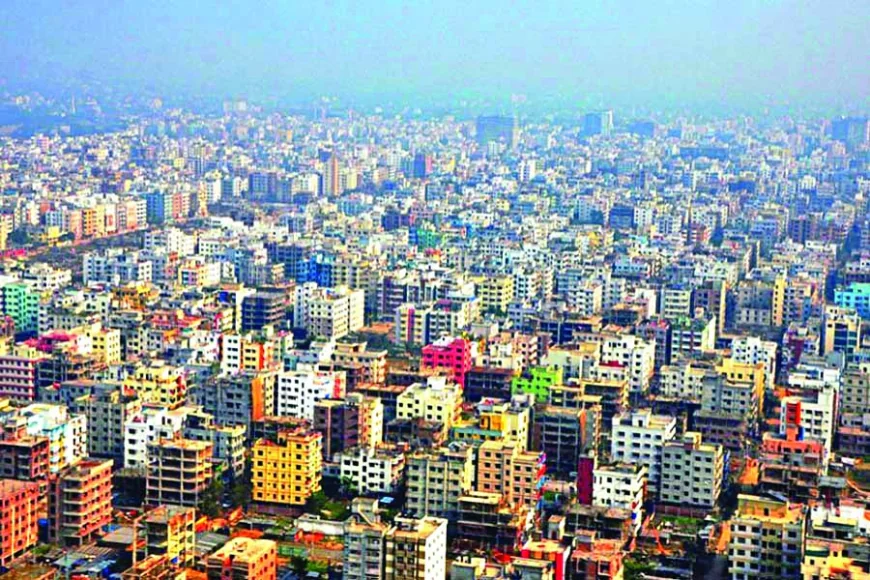
Dhaka could face a devastating earthquake measuring between 7.0 and 7.5 at any time, with geologists warning that the capital has entered the final stage of a seismic cycle that typically recurs every 300 to 500 years. Researchers say the prolonged build-up of underground stress, combined with unplanned urban expansion and weak disaster preparedness, leaves one of the world's most densely populated cities dangerously exposed.
The warning has gained renewed urgency following a 7.2-magnitude earthquake in Venezuela and a series of tremors in Bangladesh over recent months. On 21 November, a 5.7-magnitude earthquake struck Madhabdi in Narsingdi, sending strong tremors across Dhaka and neighbouring districts. Several buildings tilted, 10 people were killed, and hundreds were injured. Since then, smaller earthquakes have continued to shake different parts of the country.
Seismologists say these minor tremors should not reassure residents. Instead, they may signal the gradual release of energy along fault systems where far greater stress continues to accumulate.
Bangladesh sits at the junction of three active tectonic plates—the Indian, Eurasian and Burma plates—making it one of South Asia's most earthquake-prone countries. Two major fault systems, the Madhupur Fault near Dhaka and the Dauki Fault close to Sylhet, have not experienced a major rupture for more than a century, allowing enormous tectonic pressure to build beneath the region.
Dr Mehedi Ahmed Ansary, a professor at the Bangladesh University of Engineering and Technology (Buet), said large parts of Dhaka had been built on reclaimed wetlands filled with sand and soft sediments.
"During a powerful earthquake, these reclaimed areas could lose their strength and behave like liquid," he said. "High-rise buildings may tilt, sink or collapse because the ground beneath them will no longer provide stable support."
While predicting the exact timing of an earthquake remains impossible, Ansary said reducing future losses depends entirely on preparation.
"Almost 90% of earthquake fatalities result from collapsing buildings," he said. "Strengthening vulnerable structures should become a national priority."
According to the Rajdhani Unnayan Kartripakkha (Rajuk), Dhaka and its surrounding metropolitan area contain around 2.1 million buildings. Government planning documents estimate that a magnitude-7 earthquake could completely destroy about 72,000 structurally weak buildings, while triggering the collapse of as many as 850,000 structures across the wider metropolitan area. Casualties could reach 300,000 to 400,000 people within a short period, with the death toll likely to rise as rescue efforts become overwhelmed.
Nearly 40% of buildings taller than four storeys are considered highly vulnerable, while densely populated informal settlements face an even greater risk because of weak construction standards.
Urban planners say the threat extends well beyond fragile buildings. Many neighbourhoods, particularly in Old Dhaka, have roads only 3 to 5 feet wide, severely restricting emergency access. Gas pipelines could ignite widespread fires, damaged water and sewer networks could flood entire districts, and emergency responders lack the equipment needed to rescue people trapped beneath collapsed structures.
Experts argue that the disaster itself cannot be prevented, but its consequences can. Countries such as Japan and Chile have demonstrated that rigorous engineering standards, strict enforcement of building codes and effective emergency planning can reduce earthquake-related deaths by as much as 80%.
They urge Bangladesh to enforce the Bangladesh National Building Code for all new construction, make liquefaction testing compulsory before development, retrofit ageing and vulnerable buildings, protect remaining wetlands and open spaces, strengthen community-based emergency response systems, decentralise Dhaka through satellite cities, widen roads in densely populated neighbourhoods and develop a long-term national earthquake preparedness strategy.
Without decisive political commitment, experts warn, the next major earthquake could transform Bangladesh's capital into one of the deadliest urban disaster zones in modern history.