
Part-1
A River Country under Stress: Causes and Possible Solutions
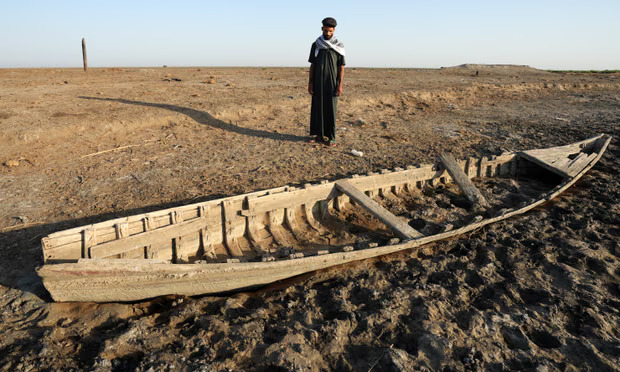
Bangladesh is a river country not only in geography but also in history, economy, culture, and imagination. Its rivers have shaped settlement, agriculture, fisheries, navigation, folklore, and the ecological identity of the delta. Many of the country’s major rivers are transboundary, carrying water, silt, nutrients, and, increasingly, pollution across borders.
For centuries, rivers sustained the wetlands, floodplains, and fertile soils on which Bangladesh built its civilization. Today, however, the same rivers are under extreme pressure from industrial discharge, untreated sewage, solid waste, plastic leakage, encroachment, siltation, and weak governance. River pollution is no longer just an environmental issue; it is a public-health crisis, an economic risk, and a threat to long-term national resilience.
A 2024 World Bank assessment warned that major rivers in Bangladesh have suffered severe water-quality decline because of industrial discharge, unmanaged waste, plastics, and untreated sewage, while environmental pollution more broadly imposes enormous health and economic costs on the country. World Bank
Transformation and statistics of river systems:
The scale of the river system itself helps explain both Bangladesh’s historic strength and its present vulnerability. Older transport and waterway documents often describe Bangladesh as having roughly 700 rivers, streams, and canals with a total river length of around 24,000 kilometers. Of that network, about 6,000 kilometers are navigable in the monsoon, but only about 3,900 kilometers remain navigable in the dry season. That seasonal shrinkage is a reminder that flow reduction, sedimentation, and channel degradation are not abstract concerns; they affect trade, mobility, and river ecology every year.
At the same time, the official count of rivers has become a governance issue in its own right. In June 2026, the shipping minister told parliament that a new inter-agency list, published in April 2025, identified 1,415 rivers in Bangladesh. The difference between older and newer counts reflects not only mapping methods but also the long national debate over what remains a living river, what has become a canal, and what has been lost to encroachment, drying, or fragmentation. World Bank BSS
The tension between abundance and extinction:
This tension between abundance and disappearance lies at the heart of the river crisis. The original article’s warning that many rivers had already died or were dying remains painfully relevant in 2026. The public debate is now less about whether rivers are in trouble and more about how quickly navigability, ecological function, and public access are being lost.
In Dhaka alone, more than half of the canals have disappeared or become clogged, worsening pollution and interrupting the natural drainage system that once connected urban life to surrounding rivers. Once a river system becomes shallow, blocked, or converted into a wastewater channel, pollution intensifies because flow can no longer dilute or flush contaminants effectively. Thus, river death in Bangladesh is rarely caused by one factor alone; it is the cumulative outcome of reduced flow, encroachment, waste dumping, and institutional neglect. World Bank
The current status of the most polluted rivers:
Among the most polluted rivers, those surrounding Dhaka remain the most alarming symbols of national failure. Buriganga, Turag, Balu, Shitalakhya, Dhaleswari, and Tongi Khal have for years absorbed the combined burden of the capital’s growth.
Dissolved Oxygen:
A major review of river pollution in Bangladesh found that dissolved oxygen was nearly zero in the Buriganga and at several points in the Turag, Balu, Sitalakhya, and Karnaphuli.
Presence of heavy metals:
The same review noted that concentrations of metals such as zinc, copper, iron, lead, cadmium, nickel, manganese, arsenic, and chromium often exceeded drinking-water standards in major urban rivers. Buriganga is repeatedly described as a “dead river” in terms of water quality, while the Turag and Balu were identified as ecologically critical because of extensive pollution. The problem is not confined to Dhaka: Karnaphuli in Chattogram, along with Rupsha, Pashur, Korotoa, and other urban or industrially influenced rivers, has also faced severe contamination. PubMed Central
Structural causes of pollution:
The causes of river pollution in Bangladesh are structural, not incidental. Rapid population growth, unplanned urbanization, weak land-use control, and riverbank industrialization have turned many rivers into convenient disposal channels. Historically, official studies around Dhaka identified industry as the dominant pollution source, followed by municipal wastewater. That pattern has not fundamentally changed.
The World Bank’s 2026 program note states that more than 7,000 factories release an estimated 2,400 million liters of untreated wastewater into waterways around greater Dhaka every day. The same source notes that over 80 percent of untreated wastewater and sewage still ends up in Dhaka’s interconnected waterways.
In other words, the capital’s rivers are carrying not simply “dirty water,” but the unresolved metabolism of a megacity whose waste systems have lagged far behind its economic growth. World Bank
Economic Growth vs. Environmental Disaster:
The industrial paradox is especially sharp in Bangladesh because some of the country’s greatest economic success stories are also among its heaviest water polluters.
Readymade Garments and Textile Sector:
The ready-made garment and textile sector remains the backbone of export earnings. According to BGMEA data, Bangladesh’s RMG exports reached US$39.35 billion in FY2024-25, accounting for 81.49 percent of total national exports.
Leather and Footwear Industry:
The leather and footwear sector is also expanding the Bangladesh Investment Development Authority reports that exports from the broader leather-footwear sector reached US$1.5 billion in 2024, with strong year-on-year growth. These sectors generate jobs, foreign exchange, and industrial upgrading. Yet they also consume large volumes of water and produce complex wastewater laden with dyes, chemicals, salts, organic loads, and heavy metals. The problem is therefore not industrialization itself, but industrialization without disciplined environmental compliance and without a circular water strategy. BGMEA BIDA
To be continued in Part-2
(Tarequl Islam Munna: Journalist, Columnist and Conservator, Wildlife and Environment. He could be reached at: munna_tareq@yahoo.com)